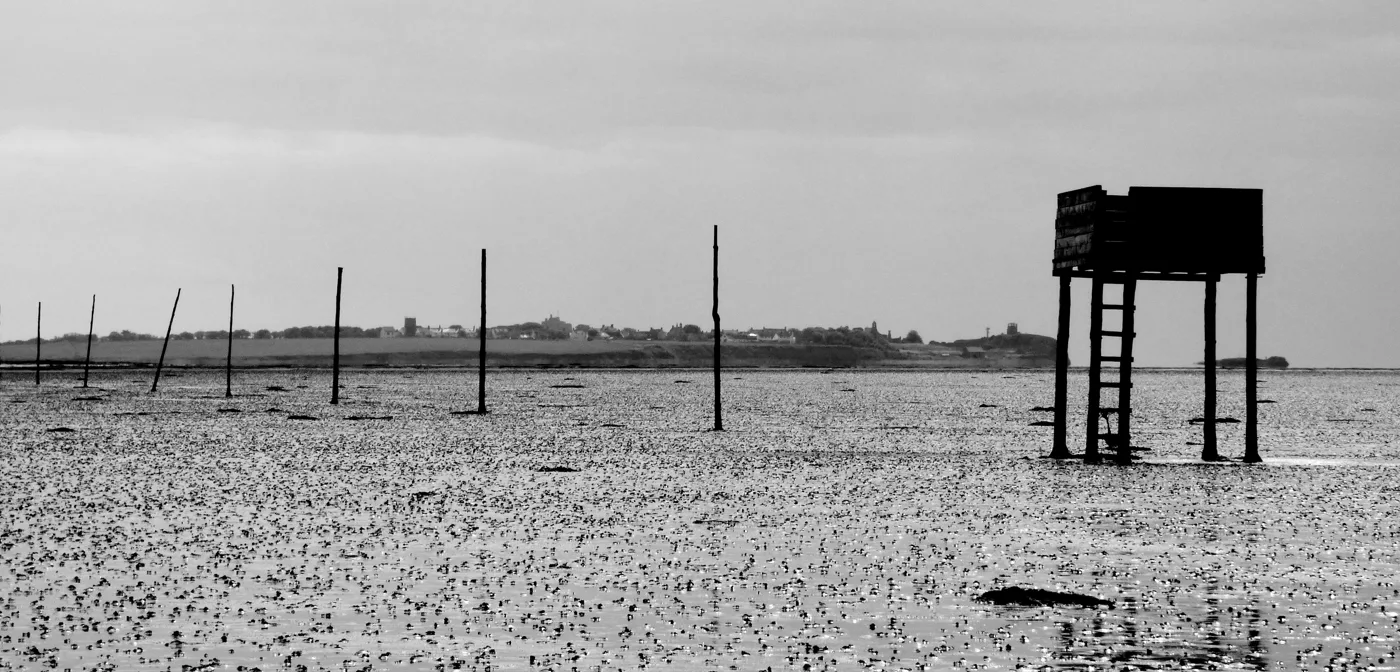

The 62-mile route from Melrose to Holy Island is one of Lonely Planet's 50 picks for 2027. Its last stage into Northumberland is walkable only at low tide.
St Cuthbert’s Way has been named one of Lonely Planet’s 50 picks for Best in Travel 2027. Lonely Planet’s category for it is “Best for a pilgrimage”.
The route is 100km, or 62.5 miles. It starts at Melrose in the Scottish Borders, beneath the Eildon Hills, and it finishes on Holy Island. Only the last third of it is in Northumberland, and that is the third that catches people out.
Northumberland County Council announced the listing on 23 September, as did Scottish Borders Council on the same day (Northumberland County Council, Scottish Borders Council). The route is managed jointly by Scottish Borders Council, Northumberland National Park Authority and Northumberland County Council, and it is one of Scotland’s Great Trails (St Cuthbert’s Way).
The Northumberland half
The official route splits into five stages. The last three cross into Northumberland:
- Melrose to Harestanes
- Harestanes to Yetholm
- Kirk Yetholm to Wooler
- Wooler to Fenwick
- Fenwick to Holy Island
The route’s own guidance is that it “can easily be completed in 4 to 6 days”. Wooler is the one substantial Northumberland town on it, and the College Valley and Cheviot country either side of Kirk Yetholm is the emptiest walking in the county.
The last stage does not negotiate
The finish is a causeway crossing that is open only at low tide, and there are two ways to make it. They are not the same, and the published times do not cover both.
The causeway road. Northumberland County Council publishes official safe crossing times for it, years ahead. Always allow 30 minutes on top, because wind can shorten the window (Holy Island safe crossing times).
The marked walking route over the sands, the Pilgrims’ Way, which is the traditional finish and the one in the photograph above. The published times do not apply to it. The council’s own advice is to walk it in daylight, with someone who has local knowledge, never on a rising tide, and to aim to be across before the midpoint of the safe period, not at the end of it.
Here are the road’s published safe windows for the next week:
| Date | Safe to cross | Safe to cross (second period) |
|---|---|---|
| Thu 24 September | 04:40 until 12:25 | 17:25 until 00:25 (Fri) |
| Fri 25 September | 05:45 until 12:50 | 18:20 until 00:50 (Sat) |
| Sat 26 September | 06:40 until 13:15 | 19:15 until 01:20 (Sun) |
| Sun 27 September | 07:30 until 13:45 | 19:55 until 01:45 (Mon) |
| Mon 28 September | 08:15 until 14:20 | 20:35 until 02:20 (Tue) |
| Tue 29 September | 08:55 until 14:55 | 21:10 until 03:05 (Wed) |
| Wed 30 September | 09:30 until 15:40 | 21:35 until 03:55 (Thu) |
The windows move by roughly 40 minutes a day. A walker who plans the last stage around the times for the day they set off, rather than the day they arrive, will get it wrong.
What the councils said
Andrew Fox, Chair of Visit Northumberland, said the listing “shines a global spotlight not only on St Cuthbert’s Way, but on the wider range of world-class experiences that make Northumberland such a distinctive destination”.
Cllr Glen Sanderson, Leader of Northumberland County Council, placed it alongside the Northumberland Coast Path, which recently marked its 20th anniversary, Hadrian’s Wall Path and the new Roof of England Walk across the North Pennines National Landscape.
Cllr Euan Jardine, Leader of Scottish Borders Council, called the route “a beautifully rewarding, long-distance walking experience, which combines wild landscapes, peaceful countryside and a real sense of history”.
The county council says Northumberland’s visitor economy more than doubled in value over the past decade, reaching a record £1.58 billion in 2025, with spending rising faster than visitor numbers.
What it means for you
If you live on the route, expect more walkers from spring 2027 rather than this autumn. Best in Travel lists move bookings the following season, and the northern stages are the ones with the fewest beds.
If you are walking it, the causeway is the part to plan backwards from. Fix the day you want to arrive on Holy Island, read that day’s window, then count the stages back from it.
If you are driving to meet someone at the finish, the same times apply to your car, and the A1 is currently restricted to 40mph around the clock on both sides of Morpeth into December. Our Northumberland roadworks and travel page carries the full crossing table to 8 October alongside the closures.
More Northumberland days out are on our things to do in Northumberland page.
Sources
- Northumberland County Council: St Cuthbert’s Way named one of Lonely Planet’s top travel experiences, 23 September 2026, for the listing, the 62 miles, the Holy Island finish, the quotations from Andrew Fox and Cllr Glen Sanderson, and the £1.58 billion visitor economy figure for 2025.
- Scottish Borders Council: St Cuthbert’s Way named among Lonely Planet’s Best in Travel 2027, 23 September 2026, for the 100km length, the Melrose start beneath the Eildon Hills and the quotation from Cllr Euan Jardine.
- St Cuthbert’s Way, the route’s official site, for the 100km and 62.5 miles, the five stages, the 4 to 6 day guidance, the tidal finish, the three managing bodies and its status as one of Scotland’s Great Trails.
- Holy Island safe crossing times, Northumberland County Council, for the published windows for 24 to 30 September 2026, the 30-minute rule, and the warning that the times do not apply to the marked walking route over the sands.
Have your say