

Council alarm users face full-cost charges, consulted at £8.51 a week against about £6 now, and 1,200 in the Blyth Valley area would lose warden call-outs.
Northumberland County Council wants to charge the full cost of its personal alarm service and stop sending wardens out to calls. About 2,800 people, most of them older or disabled, use the service. Cabinet decides on Tuesday 6 October.
The proposals are in a report to Cabinet published ahead of the meeting. It follows a public consultation that ran from 6 March to 17 April and drew more than 1,200 responses.
What would change
Cabinet is asked to approve three things:
- Full-cost charges. The council would set charges that recover the whole cost of running the service, and raise them every year with inflation.
- Monitoring only. The service would answer alarm calls and contact family, friends or neighbours. It would no longer send its own staff.
- No more mobile wardens. The warden response team, which only covers the south east of the county, would close. Staff would be consulted, and the report says compulsory redundancies are a risk.
What it would cost you
The consultation put these prices to users:
| Option | Weekly charge |
|---|---|
| Monitoring only | £8.51, plus a fitting charge in the first year |
| Monitoring with warden response, if kept | £15.29, plus a fitting charge in the first year |
| One-off installation fee | £20 |
Both include maintenance of a standard kit: a smoke alarm, the lifeline unit with its SIM, and a pendant.
The report does not fix the final price. Cabinet is asked to hand the new charges to the Executive Director of Adults, Ageing and Wellbeing as part of an implementation plan. No start date is given.
Most users would still pay more. Of the 2,836 people on the service today:
- 2,227 (78.5%) pay the current full charge, which the report puts at “just over £6 per week”
- 266 (9%) pay nothing
- the other 343 pay assorted lower amounts left over from old grant schemes
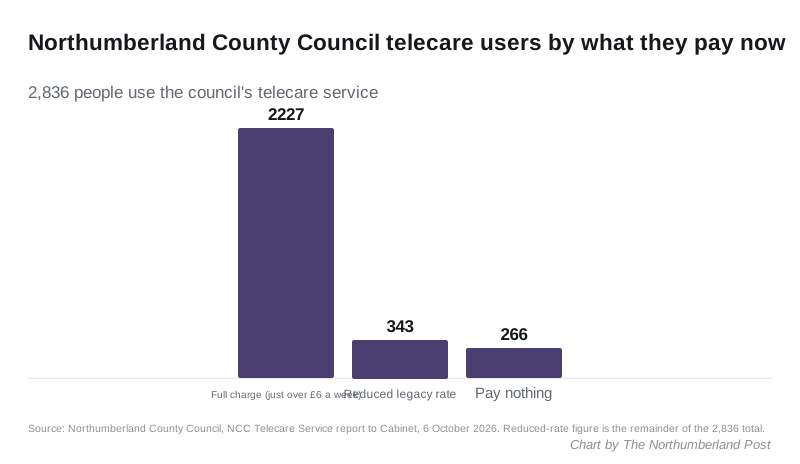
There are seven different pricing structures, mostly depending on when someone joined. Charges have not gone up “for a number of years”, the report says.
Why the council wants this
The service costs £1.596m a year to run against budgeted income of £0.953m. That leaves the council paying £0.643m a year, and the report says actual income has fallen short of the budget in recent years. The change was listed as a saving in the budget Full Council set on 18 February.
The report also argues the current set-up is unfair. Only people in or near the old Blyth Valley council area get a warden who can come out, for example after a minor fall. Everyone else in the county gets monitoring only, whatever they pay. Covering the whole of rural Northumberland with wardens was ruled out as too costly.
Who loses the wardens
Around 1,200 telecare users get the warden response today. The wardens also cover sheltered housing in the old Blyth Valley area outside office hours. That includes evening and weekend cover for lift failures and building faults, weekend and bank holiday morning calls, and night checks.
The report says those jobs are normally a landlord’s, and the council is talking to housing providers about how to cover them.
The North East Ambulance Service responded to the consultation. It warned that removing the wardens could increase demand on ambulances, “potentially affecting response times and creating additional risks for vulnerable people”. Council officers have since met the service, and the report says modelling of the impact will continue.
The council’s own impact assessment says the decision “would adversely affect older people and people with disabilities”.
What users said
The consultation found strong support for the service and less for paying more:
- 91% of users who replied want the council to keep running it.
- 66% of those want it kept with the warden response.
- 38% said they would keep paying if charges rose, and 37% said maybe.
One family member wrote that the service is “part of a network of systems we have in place to allow Mum to live independently at home alone”. The report notes that commercial alarm services are generally cheaper than the charge the council would need.
Councillors on the Health and Wellbeing scrutiny committee saw the plans on 1 September. They asked that anyone who cancels gets a personal conversation about the risks, and that users get help checking they claim every benefit they are entitled to.
What it means for you
- Nothing changes yet. Cabinet decides on 6 October, then the council writes an implementation plan and sets the final charges. It has not said when they start.
- If you have warden response (the old Blyth Valley area, which covered Blyth, Cramlington and Seaton Delaval), plan who would come out if your alarm goes off. Under monitoring only, call handlers ring your named contacts first, so make sure those names and numbers are current.
- If the new price is too much, the report points to commercial providers. The TEC Services Association lists accredited ones.
- Check your benefits. Attendance Allowance and Pension Credit can help with costs like this. Our council tax guide covers the reductions available too.
- If you get other council care, the report says telecare costs are counted as an outgoing in your financial assessment, and a change may trigger a review of your care plan.
We will report the Cabinet decision and the final charges when they are set.
Sources
- Northumberland County Council: NCC Telecare Service, outcome of consultation, Cabinet 6 October 2026, for all figures, prices, consultation results and the ambulance service’s response.
- Northumberland County Council: Cabinet agenda, 6 October 2026.
Have your say