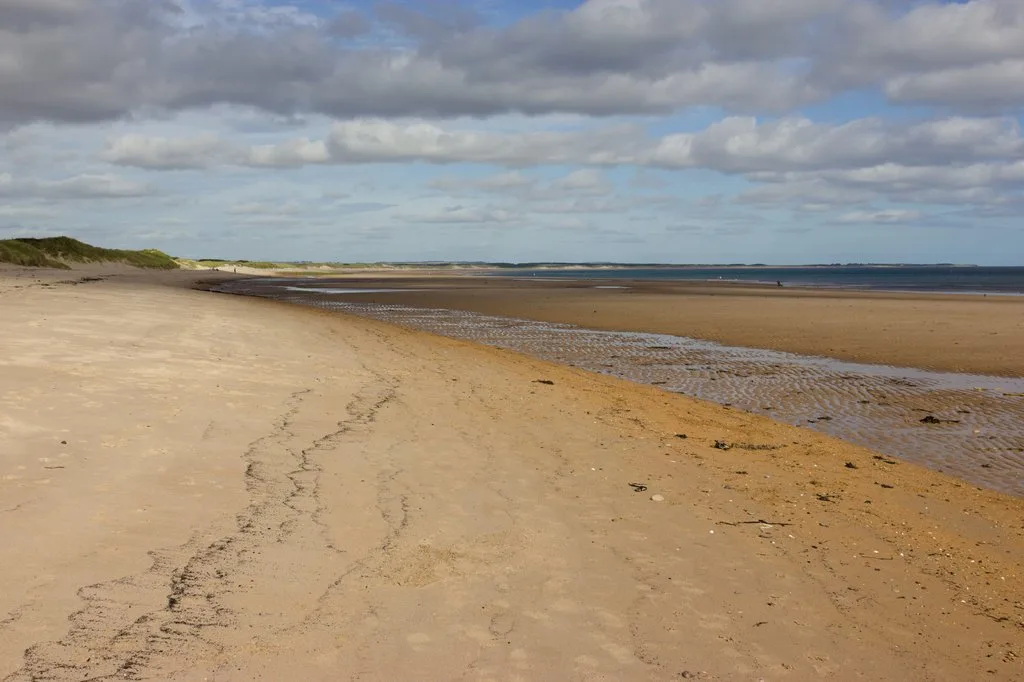

The council has named 11 places to leave collected plastic pellets, from Amble Dunes to Cresswell, plus rules for volunteers. Over 17 tonnes went in the Tyne.
Northumberland County Council has named 11 collection points along the county’s coast where people can leave plastic pellets picked up from the beach. The list was updated on 19 August 2026 and the council says more will be added (Northumberland County Council).
The pellets, known as nurdles, have been washing up since a vessel collision at the Port of Tyne on Sunday 19 July 2026. They are 1mm to 5mm across and are the raw material used to make plastic packaging, bottles and containers.
Where to take collected nurdles
The council asks that everything collected goes to one of these points, so its teams can pick it up, store it and weigh it:
- Amble Dunes
- Blyth Beach, at the Dave Stephens Centre
- Blyth, South Harbour
- Cambois beach, at Charlton’s car park beach access
- Low Hauxley
- Newbiggin, at the Maritime Centre
- Seaton Sluice, Fountain Head car park
- Seaton Sluice, Ranch car park
- Druridge, the boat compound car park opposite the Drift Inn cafe
- Druridge, Blakes Burn water outlet
- Cresswell village, at the public toilet block
Each point has a What3Words reference on the council’s page, and the council publishes a map of the sites. It asks people not to use the points for general litter or household waste.
The rules for volunteers
The council says it now has guidance for anyone who wants to help. The main points:
- Always wear gloves. Do not handle pellets with bare hands.
- Use heavy-duty bags that the council can collect.
- Stay off wet sand and the tideline where possible, and check tide times first.
- Do not dig or use mechanical equipment. It damages beach habitats and wildlife.
- Move as little seaweed as possible. Check around and under it, then put it back.
- Avoid walking over patches of pellets, which pushes them deeper into the sand.
- Do not eat, drink or smoke while collecting.
- Wash hands afterwards, and clean footwear and equipment before leaving the beach.
Anyone under 18 should be with a parent or guardian. If you find a large concentration of pellets, the council asks you to report it through its Fix My Street tool at nland.cc/fix rather than trying to clear it yourself.
Most of what went in has not been found
Over 17 tonnes of nurdles entered the River Tyne after the collision. Around three quarters of that is still unaccounted for, according to council leader Glen Sanderson in a statement issued on 12 August (Northumberland County Council).
Cllr Sanderson said the Northumberland coast had been less affected so far than others, but warned about what comes next. “It’s not just this week or next month it could be years before this problem is sorted and we have not been told anything about who will pay for the longer term issues,” he said. He has asked for guarantees on continued funding, and for a say in the contamination-level discussions when the clean-up is eventually closed off.
The council says it will look to recover its clean-up costs from the insurers of those responsible. The cause of the collision is subject to ongoing investigation.
Why it is taking so long
The clean-up is manual. The council describes teams working with rakes, brushes, sieves and bags, timed around the tides. Pellets mix into sand, stones and seaweed, they float and they sink, and they come ashore over more than one tide cycle. A beach that was cleared can be covered again by the next high water.
Specialist help is now on the coast. The council says it is working with Nurdle UK, which brings industrial trommels, microplastic vacuums and a custom-built extraction machine. The wider response involves the Environment Agency, the Maritime and Coastguard Agency, the Port of Tyne, neighbouring councils, the Mayoral Strategic Authority, the National Trust and specialist contractors.
What it means for you
The coast is open. The council says the shoreline remains open for business and leisure, and asks visitors to keep clear of clean-up teams at work.
The practical points if you are heading to a Northumberland beach:
- Do not pick the pellets up with bare hands. The public health risk on shore is described as very low and the pellets are not toxic, but the advice is not to handle them. If you do touch them, wash your hands as you would after handling any beach debris.
- Keep dogs on leads in affected areas and stop them eating or playing with pellets. If a pet swallows any and you are worried, contact a vet.
- Check before you swim. The Environment Agency runs bathing water advice through its Swimfo service. Some beaches in the area already carried advice against bathing for reasons unconnected to the pellets, and the council is waiting on further Environment Agency guidance for other waters.
- Report what you see through Fix My Street, with the location, roughly how much, a photograph if you can, and the date and time.
- Do not touch dead or sick birds. Report dead wild birds to Defra through its online reporting system or on 03459 33 55 77.
If you are planning a coastal day out, our things to do in Northumberland page has the practical detail on the beaches and reserves along this stretch, and roadworks and travel covers the closures and the Holy Island crossing times.
Sources
- Northumberland County Council: plastic pellets (nurdles) on county’s beaches, updated 19 August 2026 for the drop-off points, the volunteer guidance, the agencies involved, the health and bathing advice and the wildlife reporting routes.
- Northumberland County Council: council leader seeks longer term clarity over plastic pellets (12 August 2026) for the 17 tonnes, the proportion unaccounted for and Cllr Sanderson’s quotes.
Have your say