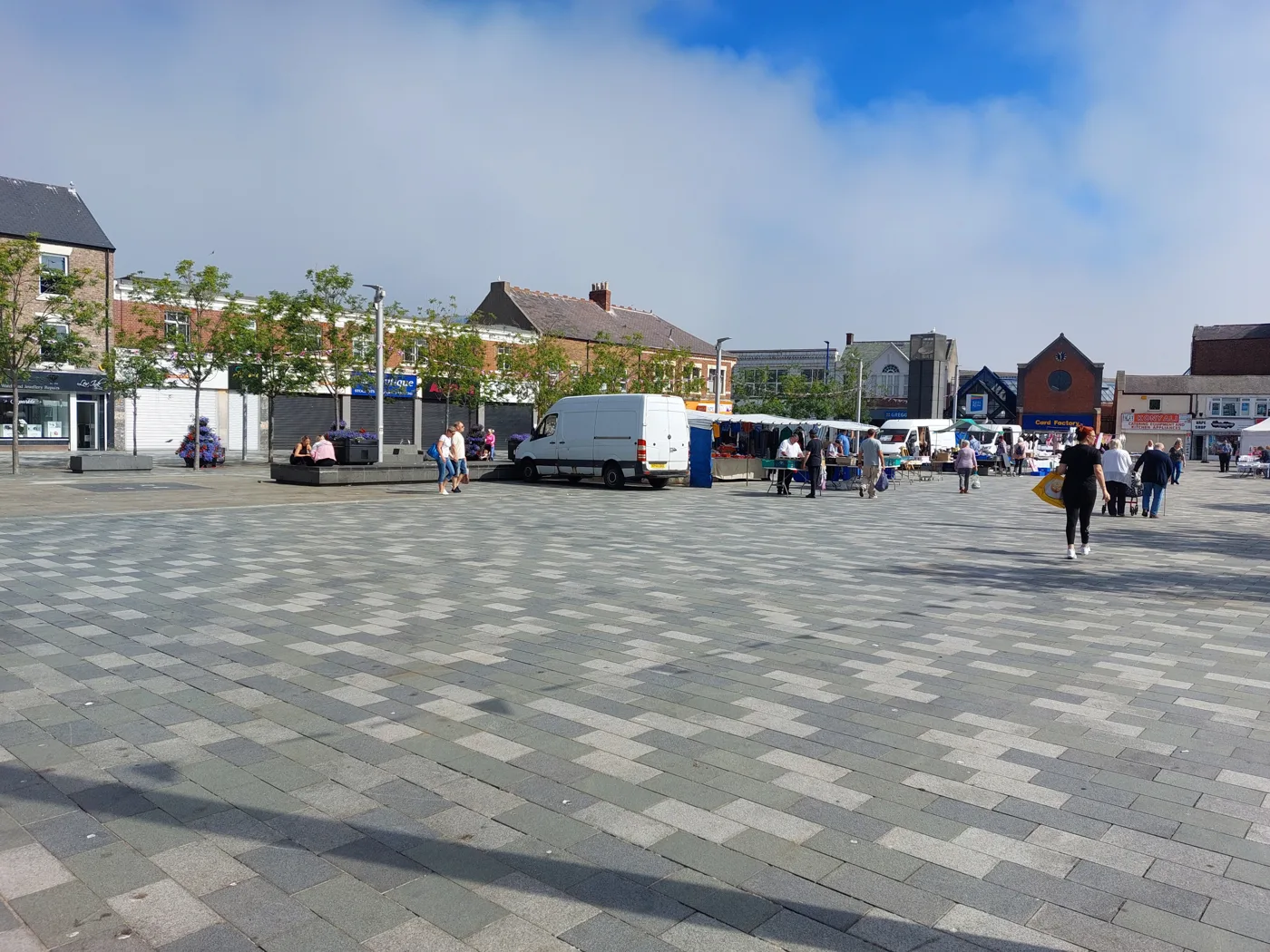

Blyth votes on 10 September on whether the council must use its neighbourhood plan to decide planning applications. Every deadline, and what the plan protects.
Everyone on the electoral register in Blyth parish gets one question on a ballot paper on Thursday 10 September, and a yes vote changes how planning applications in the town are decided. The Notice of Poll published by the county council sets the poll at 7am to 10pm across 15 polling stations, and prints the question in full:
“Do you want Northumberland County Council to use the neighbourhood plan for Blyth Parish to help it decide planning applications in the neighbourhood area?”
There is no turnout threshold. If more people vote Yes than No, the Blyth Neighbourhood Plan becomes part of the statutory development plan and the county council has to test applications in the parish against it. If more vote No, applications carry on being decided on the Northumberland Local Plan alone.
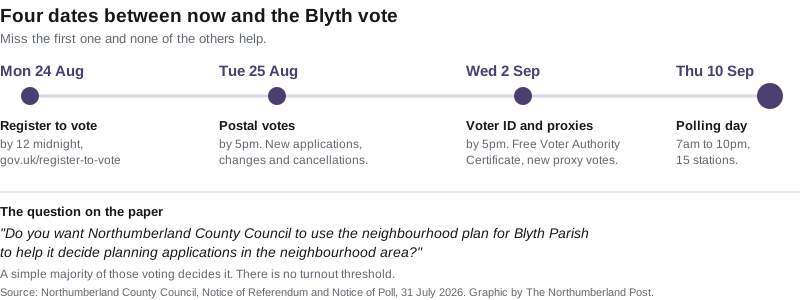
The deadlines, in the order they fall
These come from the Notice of Referendum signed by the counting officer, Dr Helen Paterson, on 31 July. The council’s own announcement of the referendum gives the postal vote deadline but not the registration one, and registration closes first.
- Midnight, Monday 24 August: last moment to register to vote, at gov.uk/register-to-vote. Miss this and nothing else on the list helps.
- 5pm, Tuesday 25 August: new postal vote applications, and any change or cancellation to an existing postal or proxy arrangement, must reach the Electoral Registration Officer at County Hall, Morpeth, NE61 2EF.
- 5pm, Wednesday 2 September: applications for a free Voter Authority Certificate or an Anonymous Elector’s Document, and new proxy applications.
- 5pm, Thursday 10 September: emergency proxy applications, on polling day itself.
The council’s elections team takes registration and postal vote queries on 01670 624844.
Photo ID: what counts
If you vote in person you must show original photographic ID. A photocard driving licence, full or provisional, a passport, a concessionary travel pass such as an older person’s bus pass, or a blue badge all qualify. Expired ID is accepted so long as the photograph is still a good enough likeness for polling station staff to identify you, and it must be the original document, not a photocopy or a photo on a phone. Postal voters do not need ID.
Anyone without an accepted document can apply for the free Voter Authority Certificate, online or on paper, up to 5pm on 2 September.
Where you vote
The Notice of Poll lists 15 stations at 14 buildings. Two stations share the Tynedale Centre on Tynedale Drive. The others are Blyth St Benedict’s Church on Devonworth Place, Briardale House Youth and Community Project on Briardale Road, Blyth Sports Centre at Bolam Park, the Buffalo Community Centre on Regent Street, Headway Arts at the old United Reformed Church on Waterloo Road, Cowpen and Crofton Bowls Club on Renwick Road, the Isabella Centre on Ogle Drive, the Lighthouse Community Hub at Newsham Primary School, Newsham Pavilion in Miners Welfare Park, Blyth Cricket Rugby and Tennis Club on Plessey Road, the Neptune scout headquarters on Fulmar Drive at South Beach, Blyth St Cuthbert’s Church Hall on Bridge Street, and Blyth Spartans’ ground at Croft Park.
Your polling card tells you which one is yours, and it is not necessarily the one nearest your door.
Add up the elector number ranges printed on the notice and they come to 29,972 across the 15 stations. Treat that as the outer edge of the electorate rather than a turnout base: register numbers can carry gaps where electors have been removed. The largest single district by that measure is the Neptune headquarters at South Beach, followed by Blyth Cricket Rugby and Tennis Club on Plessey Road and Newsham Pavilion.
What is actually in the plan
Blyth Town Council wrote it, through a steering group that includes every town councillor, and the neighbourhood area follows the parish boundary exactly. It was designated on 7 April 2022 and the plan runs to 2036. The independent examiner, Christopher Collison, reported on 12 June 2026 that subject to his modifications the plan meets the basic conditions and should go to a vote, and that the referendum area should not extend beyond the parish.
The referendum version has seven policies. None of them allocates land for housing. They are about shops, heritage and green space.
Retail. Policy 1 fixes a town centre boundary and Key Shopping Frontages on the policies map, and names four retail parks: Albion Retail Park, Blyth Valley Retail Park, and Cowpen Road north and south. Proportionate extra floorspace for town centre uses at those parks, including extensions to existing units, would face a sequential assessment and, where it applies, impact testing. Five smaller parades are recognised in their own right: Broadway Circle, Plessey Road in Newsham, South Beach, The Links and Wordsworth Avenue.
Heritage. Policies 2 to 4 cover the Bondicar Terrace, Blyth Central and Blyth Heritage conservation areas. Policy 5 lists 61 non-designated heritage assets, a roll call that runs from Fort House on Links Road to a former warehouse on Ridley Street and several of the town’s pubs, including the Top House on Marlow Street, the Waterloo on Bondicar Terrace and the Windmill on Cowpen Road.
Green space. This is the part with teeth. Policy 6 designates 30 local green spaces, a designation that under national policy rules out development other than in very special circumstances. Ten of the 30 are allotment sites. The rest include Newsham Pond, Ridley Park, Halfpenny Woods, Meggies Burn, Croft Park, Cowpen Recreation Ground, Broadway Field, New Delaval Park, South Beach, and Blyth Links and Beach Gardens. Policy 7 adds eight protected open spaces, among them Blyth Golf Course, Blyth Sports Centre, both Bede Academy playing fields and the play area at Crawford Street and Millfield Gardens. The town council assessed 102 sites before settling on those lists.
What it means for you
A Yes vote is not advisory. Once a neighbourhood plan is made it forms part of the development plan, and decisions on applications in the parish have to be made in line with it unless material considerations indicate otherwise. That is the whole point of the exercise, and it is why the green space list matters more than it looks.
A No vote does not leave a vacuum. Applications would still be decided, using the Northumberland Local Plan adopted in 2022. Blyth simply would not have the extra layer.
Read the plan before you vote, not after. The referendum version, the policies map, the examiner’s report and the council’s Regulation 18 decision statement are all on the county council’s neighbourhood planning page, free to download. The policies map is the document to open if you want to know whether a particular field or parade is in or out.
If you already have a postal vote, do nothing. It carries over. You only need to act by 25 August if you want to start one, change where it goes or cancel it.
Wider planning context. What else is moving across the county, including the Alnwick and Denwick plan and the county’s own Local Plan review, is on our Northumberland planning news page.
Have your say