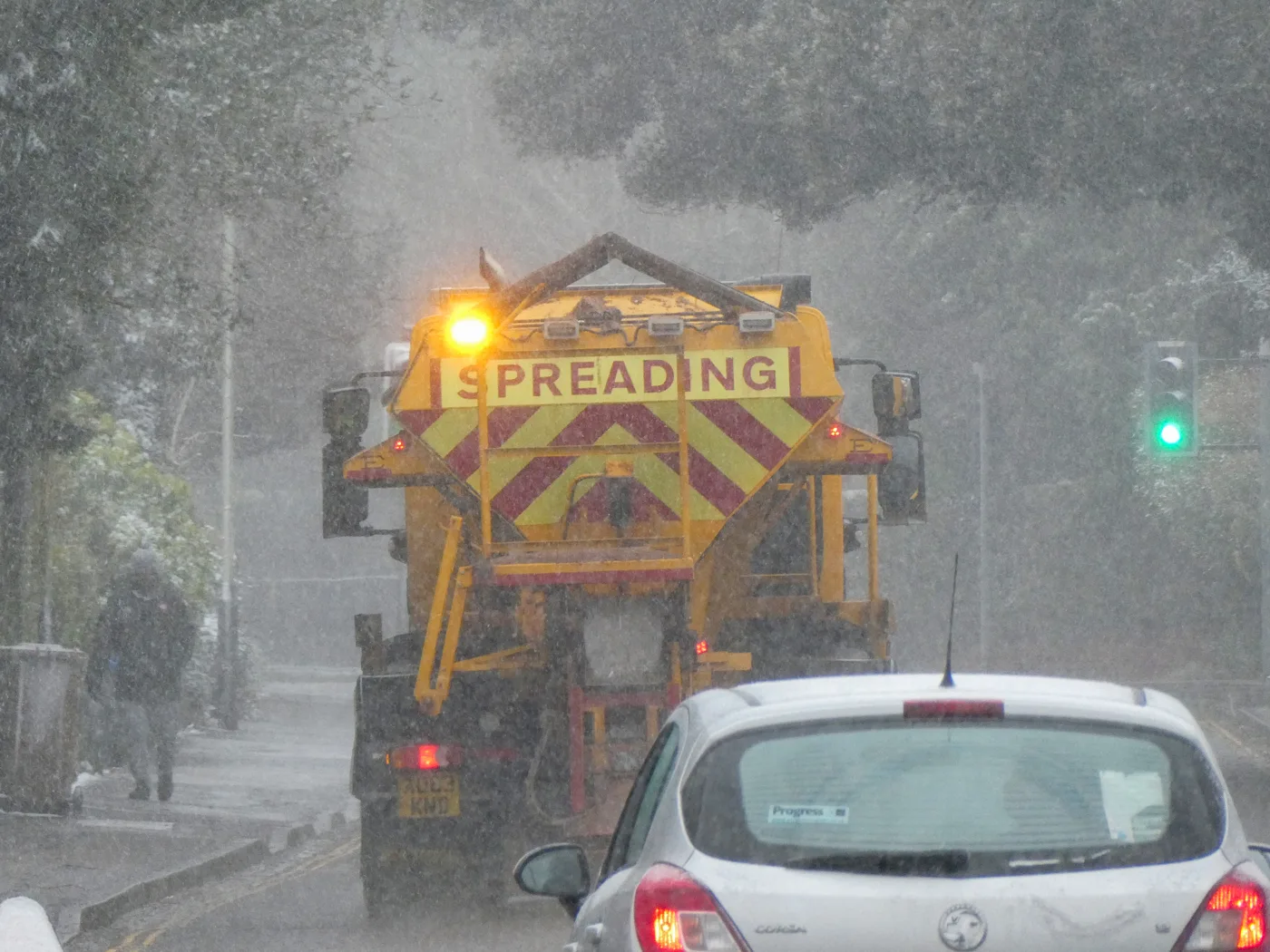

Northumberland has 44,000 tonnes of salt and 28 gritters ready, and will grit some Newcastle roads too. How to request gritting or a grit bin refill.
Northumberland County Council has 44,000 tonnes of salt stockpiled for the winter, and 28 gritting lorries to spread it. This winter its crews will also grit some of Newcastle’s roads, for the first time.
The council won a contract to do the work for Newcastle City Council. It says it has the spare capacity because it is no longer responsible for winter maintenance on the A69, and that service in Northumberland will not be cut as a result. The figures come from the council’s winter services announcement.
Overview
- Salt: 44,000 tonnes stockpiled
- Fleet: 28 gritting lorries, 2 snow blowers, and ploughs and spreaders on some 4x4s
- Staff: 127, including managers, supervisors and drivers
- Grit: 2,432 grit bins and 2,000 grit heaps across the county
- Roads: more than 3,000 miles covered
- New this winter: gritting on some Newcastle routes under contract to Newcastle City Council
When and where the gritters go out
The council’s gritting page sets out how the service works:
- Gritters go out when the forecast says the road will fall to 0°C or below, or when ice or frost is likely.
- It takes three hours to cover the county, and the aim is to have busy routes done by 8am.
- Routine gritting runs on 28 main routes. Busy footpaths, car parks and shopping areas are gritted during long icy spells.
- Ploughs go on when more than 50mm of snow falls, or snow is drifting.
The routes are planned so that nobody in a town lives more than a mile from a gritted road, and nobody in the countryside more than five miles. Main bus routes and steep approaches to junctions come first. The full network is on the council’s gritting routes map.
The council warns that salt works less well as temperatures keep falling, and that it will not stop freezing rain icing a road.
Newcastle’s roads
The release does not say which Newcastle roads the county’s crews will treat, or what the contract is worth. Councillor Mark Mather, the county council’s cabinet member for roads and highways, said “our residents can be reassured there will be no impact on the service they receive”.
Newcastle’s cabinet member for neighbourhoods, Councillor Peter Lovatt, said the contract meant the city could use the county’s “existing facilities, systems and expertise”.
Who grits what
The county council does not grit the A1 or the A19. Those are National Highways roads, and the company takes calls on 0300 123 5000. The A69 is also a National Highways trunk road, and the county council says it is no longer responsible for its winter maintenance.
In the countryside, local farmers and contractors help keep remote roads open. Some villages also have volunteer snow squads that clear footpaths, the council said.
What it means for you
- To ask for a road to be gritted, or to report one that has been missed, use the council’s road gritting request form.
- If your grit bin or heap is empty, report it on the grit bin refill form. Grit from a council bin is for roads and pavements, not private drives.
- On a bad morning, the council posts gritting plans and school closures on its alerts page, on X as @northumberlands and on Facebook as NCC Alerts.
Have your say